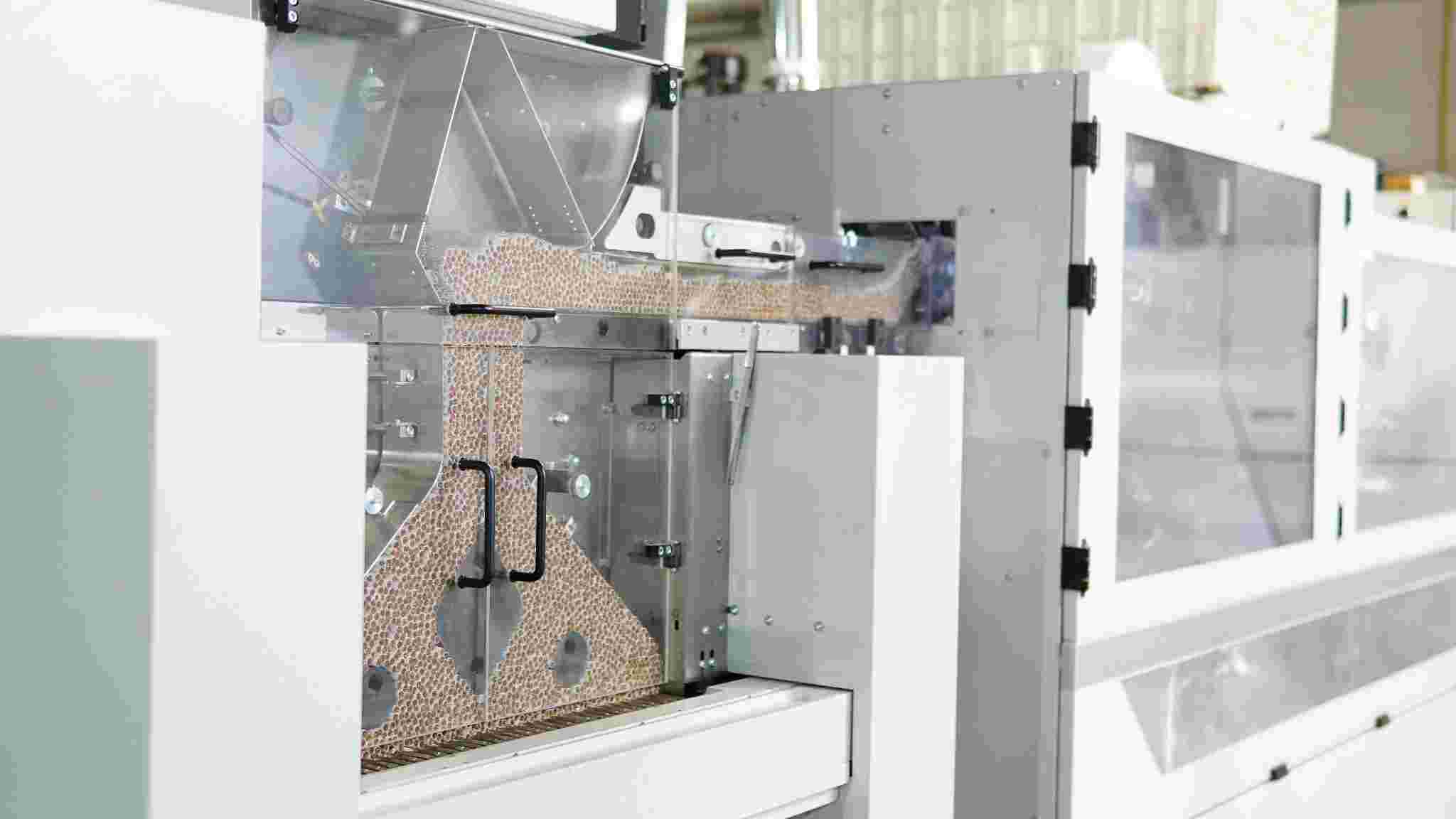
Every knife on a tobacco line — from cutter drum knives to tipping knives — made to your drawing.
Steellogy manufactures the cutting parts of tobacco processing and cigarette making in its own plant in Poland: tobacco cutter drum knives and bottom knives for KT-class cutters, rod cut-off knives for makers, filter rod cutting knives, tipping knives and the mating parts around them. Each part is made to the buyer-approved drawing or reverse-engineered from a worn sample, ground to a repeatable edge, and quoted with material, hardness and lead time stated.
Tobacco is the industry we have built the most process knowledge around. We make all seven knife families used from bale opening to the packer, to one drawing standard and one inspection routine, so a plant can consolidate its cutting parts with one supplier instead of sourcing seven part types from seven catalogues. We have developed our own manufacturing process for tobacco cutter knives, covering steel selection, in-house heat treatment and edge finishing, and we offer a structured way to check the result on your own machine before you change anything in your supply base (see below).
What we put in writing
What we control, and what we put in writing.
Knives are machined, heat-treated and ground in our own plant in Poland. Heat treatment in-house means hardness is set and verified by us, not by a subcontractor.
Where a buyer-approved drawing exists, it is the specification; material, hardness and lead time are stated on the quotation and order confirmation. Where only a worn knife exists, we measure it: geometry is reconstructed from the sample, features lost to wear are agreed with you before production, and the proposed material and hardness are stated on the quotation so you can check them against your line's requirements.
Finished knives are inspected before they ship: dimensions, hardness and edge condition are checked on a sample from each batch. Material documentation, hardness reports and dimensional inspection records are available on request; their scope is confirmed in the quotation. How we inspect a finished blade is described here.
Edge geometry and finish are held to the same drawing on every repeat batch, so machine settings and knife-change routines established on the first delivery stay valid on the tenth.
Check the result on one machine before you change anything.
We do not ask a plant to switch a cutting-part supplier on a promise. We offer a structured comparison on one machine, as a paid trial batch with the terms written into the quotation — not a free sample and not a guaranteed result. A cycle runs from fitting a new knife (or knife set) to its removal at an agreed end-of-life criterion; in-machine sharpening events are recorded within the cycle, not counted as its end.
Identify the part and the baseline.
Send the drawing or the worn knife, the OEM and machine model (for example KT 2 / KT 4, Protos, MK 9), the blade dimensions and hole pattern, what the machine cuts (leaf, stem, share of reconstituted tobacco), line speed, and your current knife life — stating whether your records refer to one knife or a set.
Quote the trial batch.
Quantity, price, lead time and the acceptance criteria are stated in the quotation, together with the minimum number of completed cycles per knife type, set from your actual replacement frequency.
Run both knives under the same conditions.
Same machine, same blend, same speed, same in-machine grinding schedule, and the same end-of-life criterion for both knives. Any change to the grinding wheel, bottom knife or settings is logged as a deviation; if the proposed knife needs different settings, that becomes a separate comparison of knife plus settings.
Measure the same thing on both sides.
For cutters: tonnes of accepted cut rag between knife changes. For cut-off and filter stations: accepted cuts or pieces. Hours are recorded too, but only mean something together with throughput. Knife-related stops and rejects are recorded alongside, so a longer run cannot hide a worse process.
Decide on numbers.
Every cycle stays in the record, including early removals and interrupted runs. You get the comparison in writing; we get feedback on our part. If you want the result used in an anonymised case, we ask for your written consent first.
Seven knife families cover a tobacco line from bale to packer.
Dimensions, steel grade and hardness are set per order from your drawing or sample and stated on the quotation. Edge finish is held to the same drawing across repeat deliveries so machine settings stay valid.
Straight and profiled knives for the rotating knife drum of tobacco cutters (KT-class and heritage primary lines), cutting conditioned leaf into cut rag and stems into cut stem against a bottom knife, with in-machine sharpening. Ground to the drawing's edge geometry.
The stationary knife the drum cuts against on a tobacco cutter (Körber's term: bottom knife), plus ledgers and counter knives for cut-off stations — “ledger” being the aftermarket term. Matched to the cutting knife and its edge angle; both mating drawings are welcome.
Rotating knives that cut the continuous cigarette rod to length on makers such as Protos, MK-series and G.D 121. A defined wear part; variant and revision are taken from your drawing or part, because one maker family spans several knife variants.
Thin circular knives that cut finished filter rods into tips on filter cutting stations; aftermarket suppliers commonly offer them in solid tungsten carbide. Made to your drawing's diameter, bore, thickness and bevel.
Knives that cut tipping paper against the tipping drum in the filter-attachment unit. Dimensions and material follow your drawing; aftermarket suppliers list carbide, HSS and ceramic versions.
Knives for slicers that open firmly compressed bales and cartons at the start of primary processing, and drawing-defined parts for delaminators; Körber describes its Delaminator as separating bales with rotating scrapers. Made to drawing or reverse-engineered from the worn part.
Knives for the paper, foil and film cutting stations of packers and overwrappers. Drawing-controlled, straight or circular as your station requires.
Wear plates, clamping and mating parts
Flat and clamping parts ground alongside the knife; send their drawings with the knife drawing so the assembly is quoted as one set.
Machines and stations
Machines and stations we make tobacco knives for.
We manufacture knives to the buyer-approved drawing or worn sample for use on the following machine types. Machine and brand names are used only to describe the intended application. Steellogy is not affiliated with, authorised by or supplying original parts on behalf of any machine manufacturer; fit is confirmed per part from your drawing or sample, never from the machine name alone. All trademarks belong to their owners.
Filter cutting stations and tipping / filter-attachment units
Packers and overwrappers — paper, foil and film cutting stations only
Knives guide
Tobacco Cutting Knives — Rotary Blades, Shear Knives & Trim Knives for Tobacco Processing
Steellogy manufactures industrial knives for tobacco processing, including cutter knives, cut-off knives, filter and tipping knives and mating parts for tobacco cutters and cigarette-making machines. Every knife is made to the buyer-approved drawing in our own plant in Poland and quoted against the agreed specification.
Tobacco processing runs from green leaf threshing (GLT), where leaves are cut into halves and tips separated, through primary — bale slicing, conditioning, cutting into cut rag — to secondary, where the cigarette rod is cut to length, filter rods are cut, tipping paper is applied and packs are wrapped. Knives are consumed at each cutting step: slicer knives at bale opening, drum and bottom knives on the cutter, cut-off knives on the maker, filter and tipping knives on the filter and tipping units, paper, foil and film knives on the packer.
In a tobacco cutter, a rotating knife drum cuts leaf and stem into uniform strands against a bottom (bed) knife, with a grinding wheel sharpening the knives in-machine. Knife condition is a quality driver: Körber states that dull knives lower cut quality and increase tobacco loss and stops, and that a higher share of reconstituted tobacco makes knives dull faster. Körber states its cutters process up to twelve tonnes of fine-cut tobacco and up to three tonnes of stems an hour. Steellogy tobacco cutter knives are ground to a repeatable edge geometry, agreed from your drawing or a worn sample, so that machine settings established on the first delivery remain valid on the next.
In secondary processing, the cigarette rod is cut to length by a rotating cut-off knife, filter rods are cut into tips by their own circular knives, and tipping paper and overwrap film have separate cutting stations — each a distinct wear part with its own geometry. These knives need dimensional accuracy and surface finish for clean cuts at production speed, so our cut-off, filter and tipping knives are ground to drawing-controlled tolerances.
Steellogy produces replacement knives for tobacco cutters and cigarette makers from Hauni / Körber (KT-series cutters, Protos makers), G.D (the 121 maker) and Molins (MK-series makers). One maker family spans multiple knife variants and revisions, and OEMs do not publish a variant-to-knife mapping — so every knife is manufactured to the buyer-approved drawing; the machine name alone does not identify the part. How we compare two knives on one machine is described in our single-machine service-life protocol.
Aftermarket suppliers list tobacco cutting knives in tungsten carbide, and UCUT also lists M2 HSS and D2; the right choice depends on the part, the machine's in-machine grinding and the blend, not on a general rule. UCUT, an aftermarket supplier, offers TiN or TiCN coatings on circular and ledger blades and describes them as raising surface hardness and reducing build-up. The exact OEM steel grade and hardness of KT-series drum and bottom knives are proprietary and not publicly published — so we determine grade and hardness from your drawing and a worn sample, and state both on the order confirmation. Similar grade selection criteria apply to industrial knives for paper cutting.
Steellogy manufactures industrial knives for the tobacco industry in Europe. Knives are made to the buyer-approved drawing, with material, hardness and lead time stated in the quotation. If material-documentation, hardness-measurement or dimensional-inspection requirements are included in the RFQ, their availability and scope are confirmed in the quotation. For sourcing context, read our OEM vs aftermarket guide; for qualification data, NDA and documentation see Supplier Information. Contact Steellogy for cutter knives, cut-off knives, filter and tipping knives or custom tobacco-processing parts.
FAQ
Frequently asked questions
No. A drawing or a worn knife is enough. Machine makers do not publish which knife variant fits which machine revision, and aftermarket part numbers are not always equivalent, so we identify the part from geometry and material, not from a number. Tell us the machine model and what it cuts; we confirm the rest from the drawing or sample.
Yes. We reconstruct the geometry from the sample and state the proposed material and hardness on the quotation. A worn knife shows what the part is, not how it was originally made — so where the edge is worn away we agree the edge geometry with you before production.
Knives for tobacco cutters (Körber / Hauni KT 2 and KT 4 and heritage primary lines), bale slicers, cigarette makers (Protos, Molins MK-series, G.D 121), filter cutting stations, tipping units, and the paper, foil and film stations of packers. For delaminators, we make drawing-defined parts. Brand names describe the intended application only; fit is confirmed per part from your drawing or sample.
Whatever your drawing specifies. Where it does not, we propose grade and hardness from a worn sample and state them on the order confirmation. OEM grades and hardness for KT-series knives are not published; aftermarket suppliers list tungsten carbide, and UCUT also lists M2 HSS and D2. We do not name a grade without a drawing or sample.
On the same machine, with the same blend, speed and in-machine grinding schedule, and one agreed end-of-life criterion for both knives. Measure tonnes of accepted cut rag between knife changes (for cut-off stations: accepted cuts), plus knife-related stops and rejects. Hours alone are not comparable without throughput. We put the method and the number of cycles in the quotation before a trial starts.
Körber states that a higher share of reconstituted tobacco dulls knives faster, lowering cut quality and increasing tobacco loss and stops. Operators commonly watch for rising dust and fines, a ragged cut, more frequent sharpening, more knock-outs and higher noise as signs a knife is near end of life — observations to validate against your plant's own criterion.
Material documentation, hardness measurement and dimensional inspection records are available on request; their scope and format are confirmed in the quotation, so that what you receive matches what your qualification procedure requires.
Yes — as a paid trial batch, quoted like any order. Quantity, price, lead time, acceptance criteria and the number of comparison cycles are stated in the quotation. A trial is a paid comparison under agreed conditions, not a free sample and not a guaranteed result; you receive the comparison in writing.
Packers carry no rod cut-off knife; that knife sits on the maker (for G.D, the 121). For packers and overwrappers we make the paper, foil and film cutting knives. Send the drawing or worn part for the station in question.
When an independent source may be appropriate
Each of these three sourcing situations calls for a different qualification process. Choose the route that fits your requirement.
Supply continuity and a second source
When the part is already defined, reliance on one supplier is a risk to continuity of supply rather than a technical issue. The aim is to have an independent manufacturer supply the part to the same definition.
When the machine builder no longer supplies the part, the starting point is what remains available: a partial drawing, a part number with its revision, or the worn part itself.
Once a part has been qualified, the economics depend on repeatability: the part can be reordered with the same approved revision, material and inspection scope, without repeating the qualification process.
OEM and machine model (KT 2 / KT 4, Protos, MK 9…); the technical drawing and/or a worn sample; blade dimensions and hole pattern; what the machine cuts (leaf, stem, share of reconstituted tobacco); line speed; your current knife life (one knife or a set) and the reason for the enquiry (service life, second source, legacy machine, repeat part); the documents your qualification procedure requires. Incomplete? Send what you have — we start from a photo and a machine name and ask for the rest.